Previz: LED Walls Under a Glass Roof
A gala dinner for a couple hundred people in an old market hall, three LED walls on a stage, and a roof made of glass.
The room
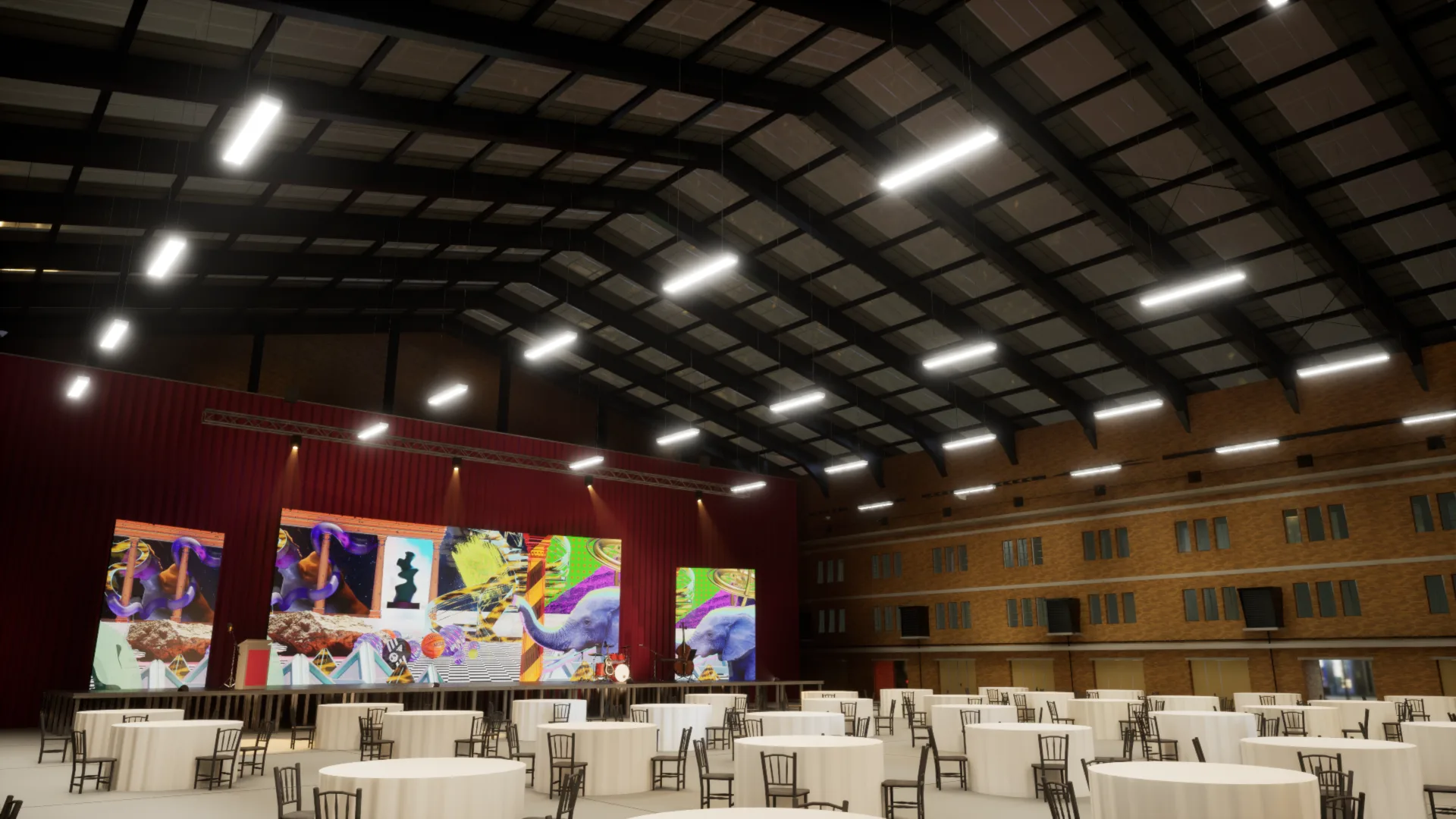
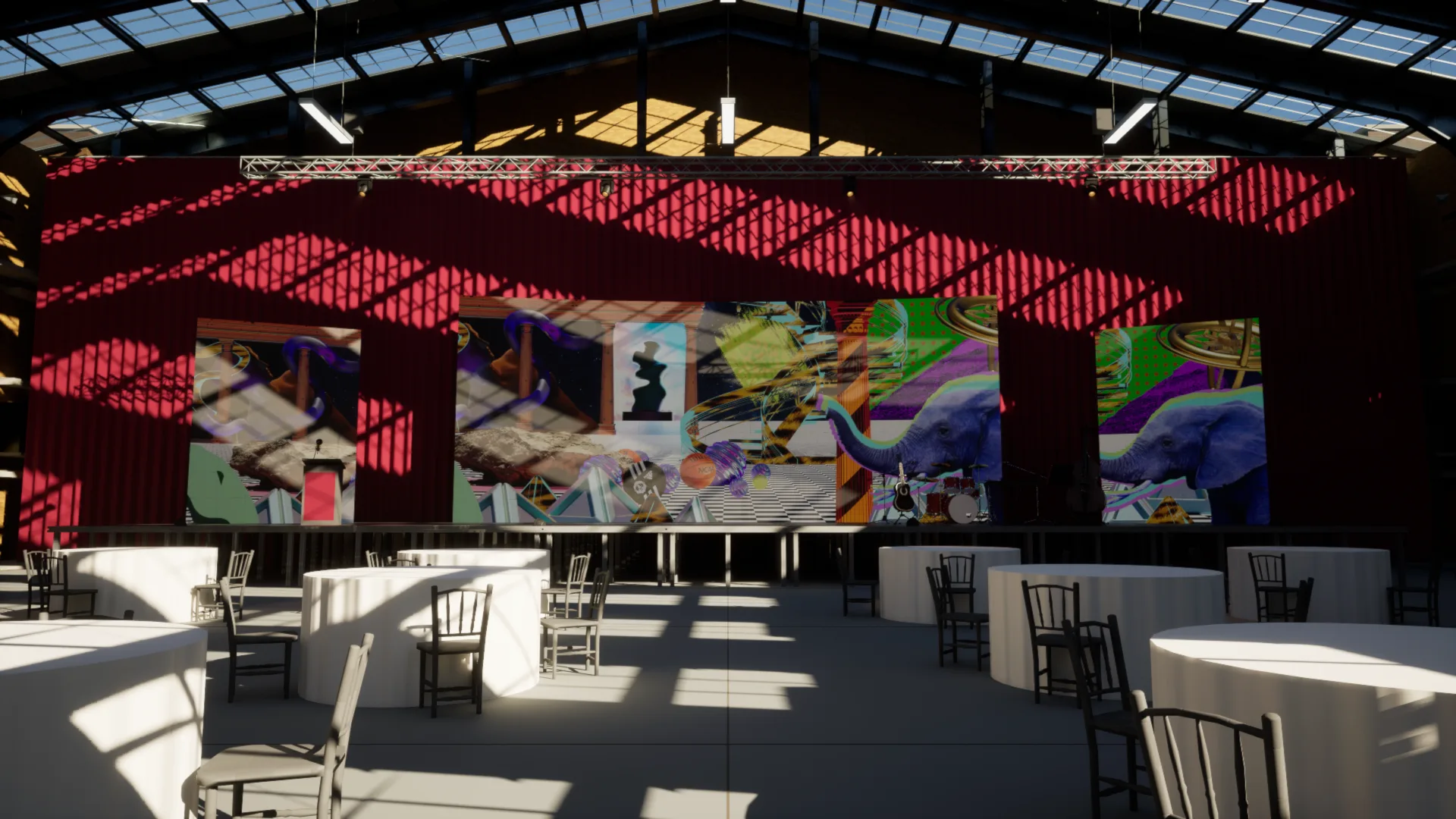
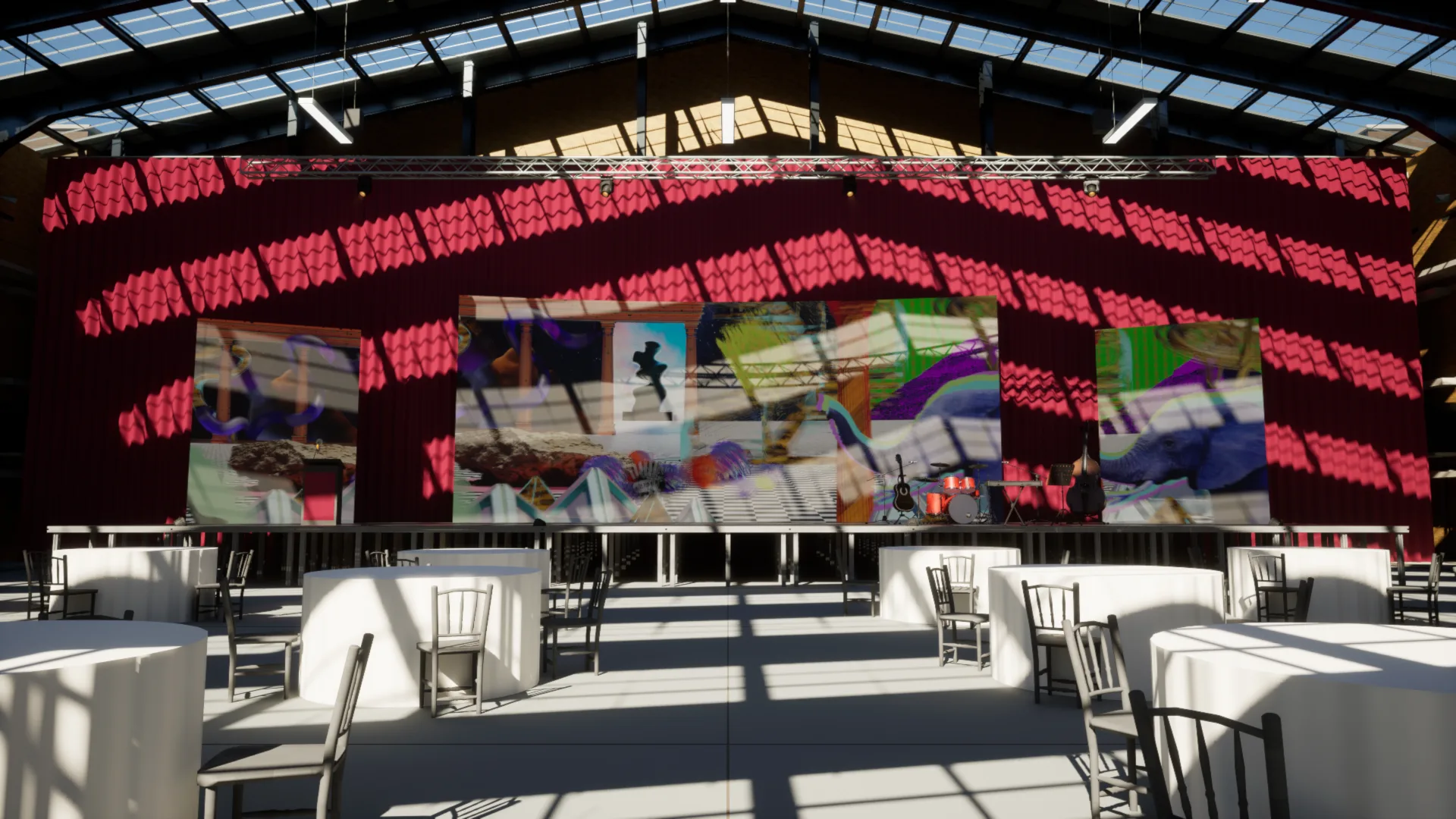
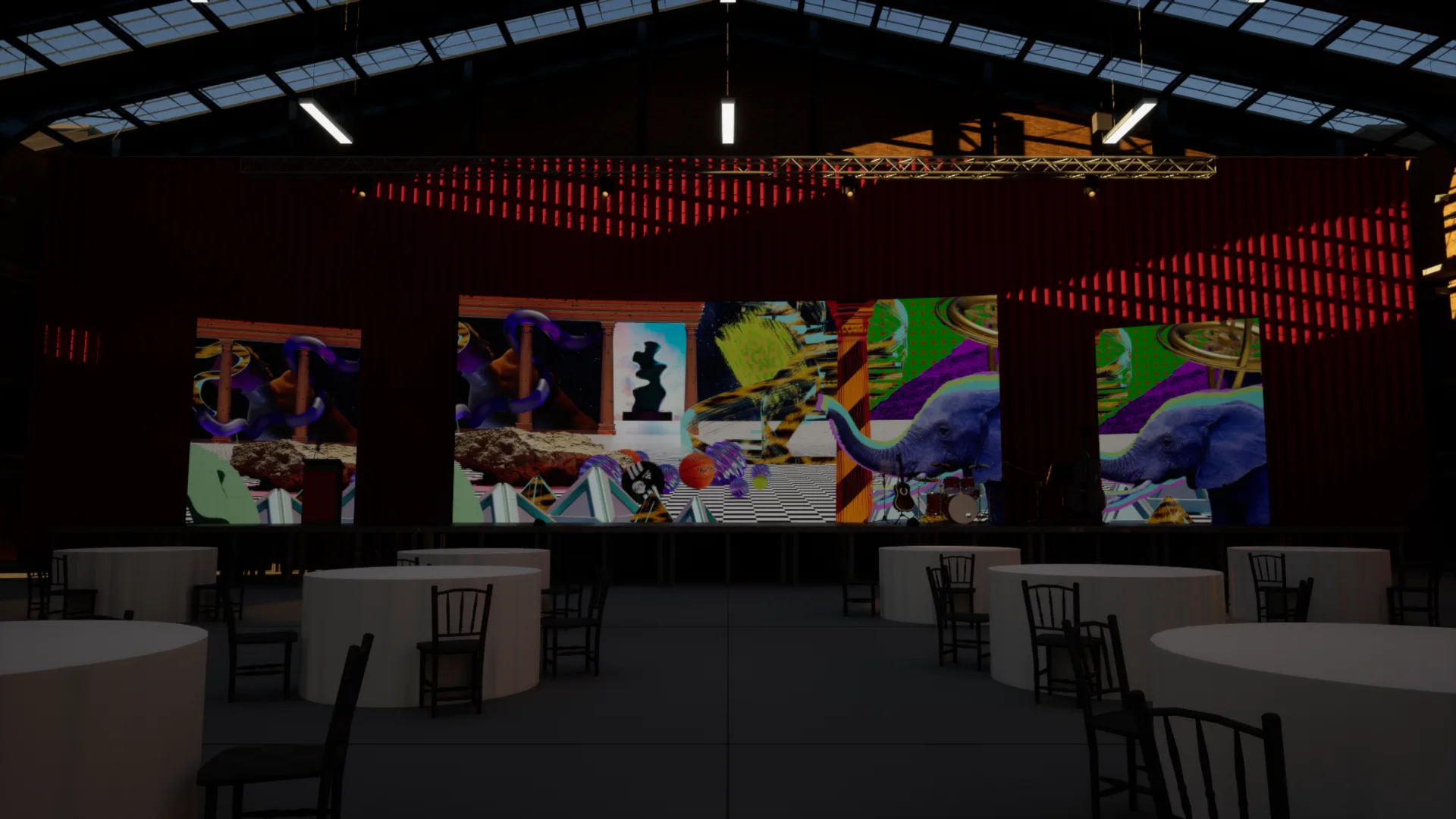
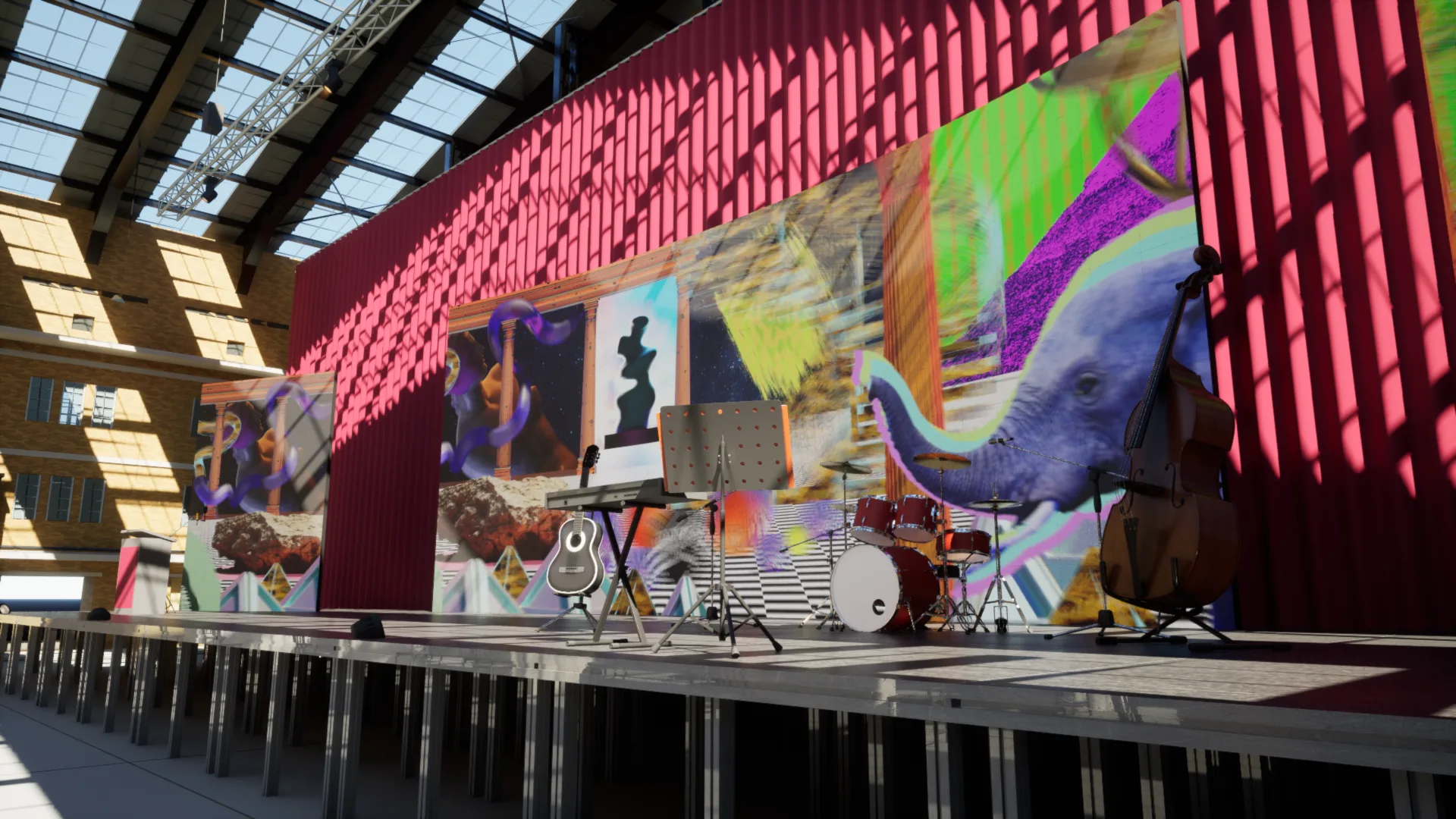
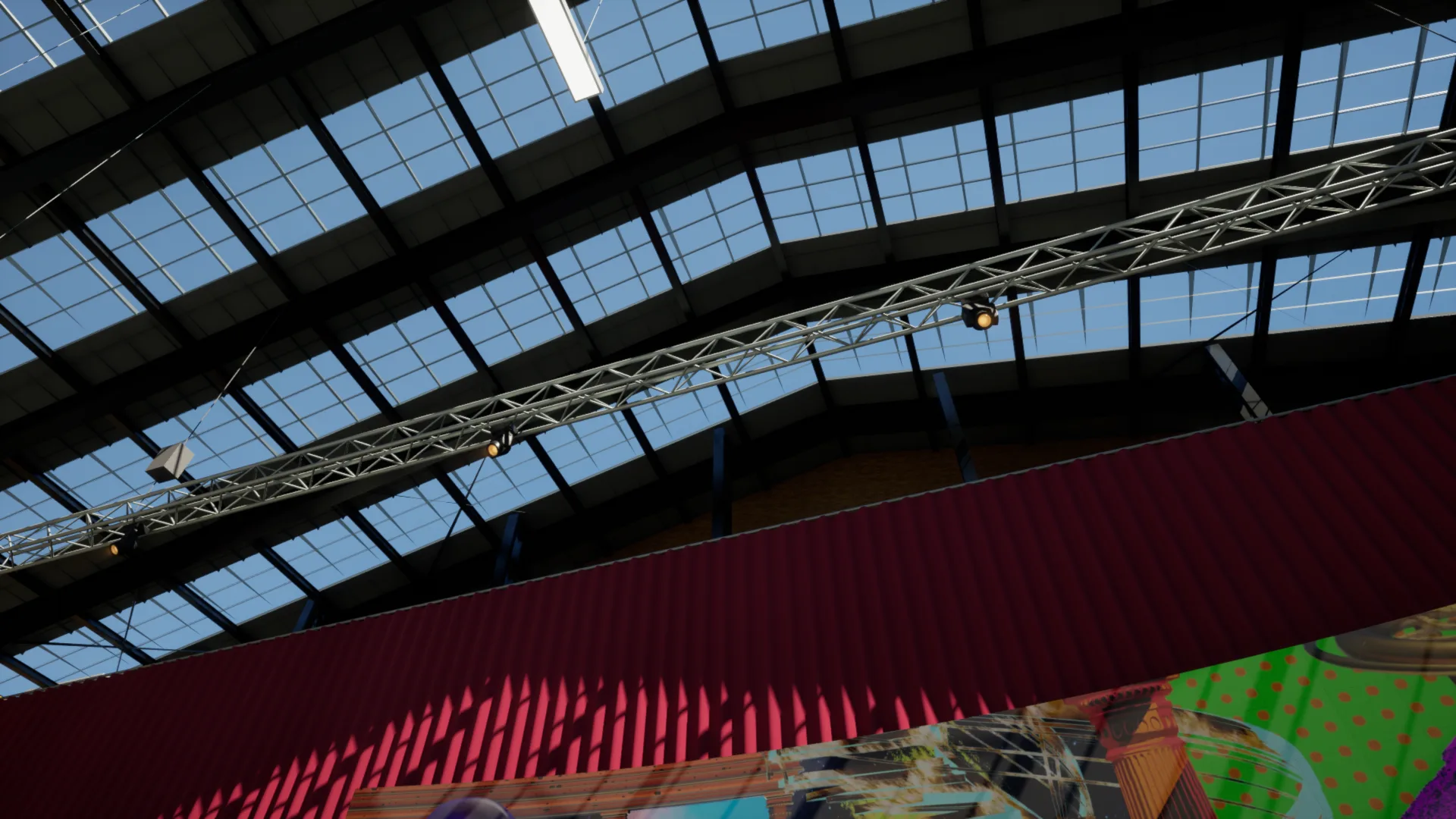
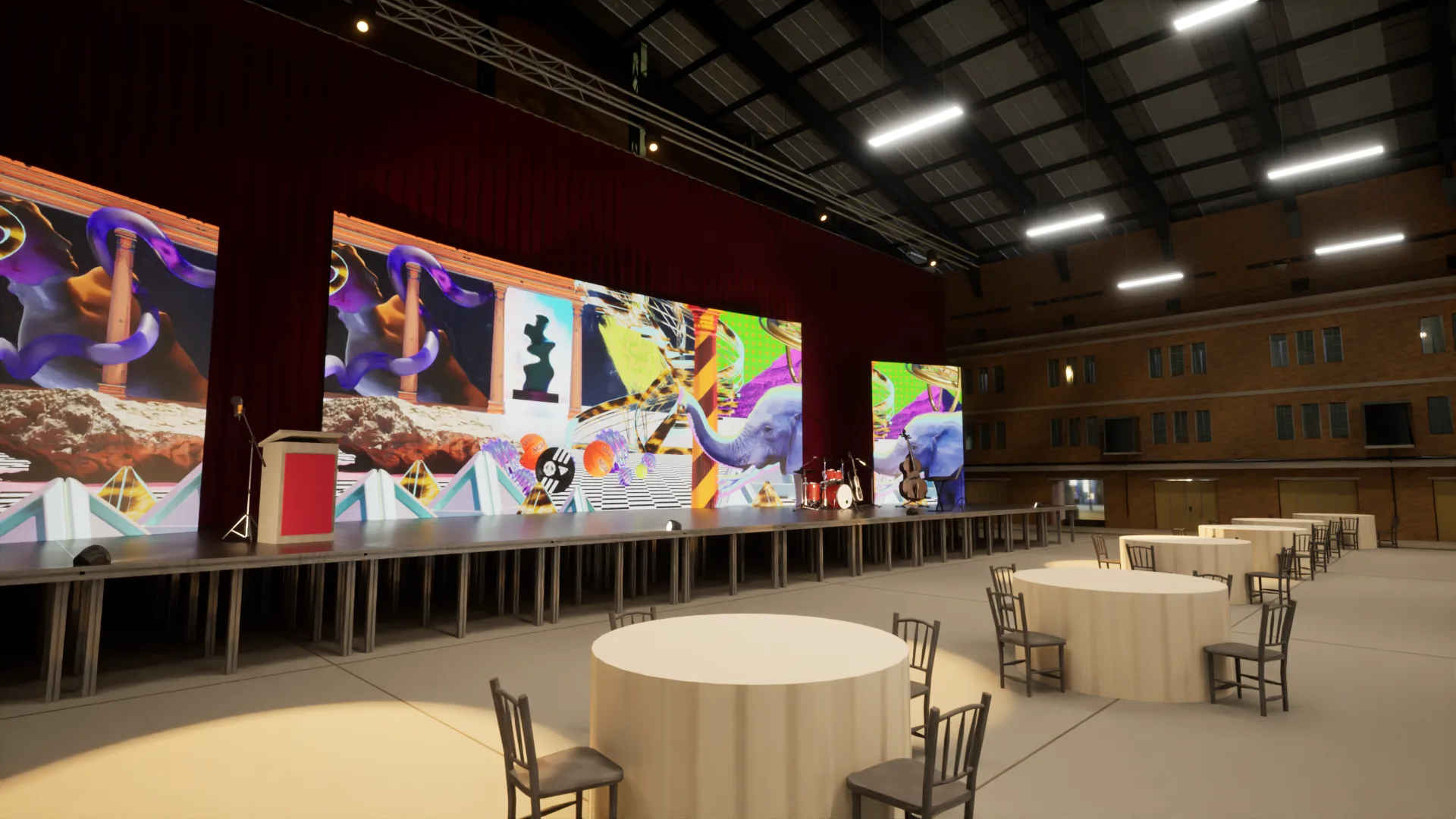
I found a model of the Centrale Markthal in Amsterdam on Sketchfab. It's a brick warehouse hall measuring 37 by 53 metres. Inside it I set up a corporate dinner similarly to what I used to see as an AV technician: a stage at 1m high, and curved LED wall with two angled wings, and round tables across the floor. It's a good case for previz because of the glass roof, which will cause the sun to washout the screens.
1 — The Screen
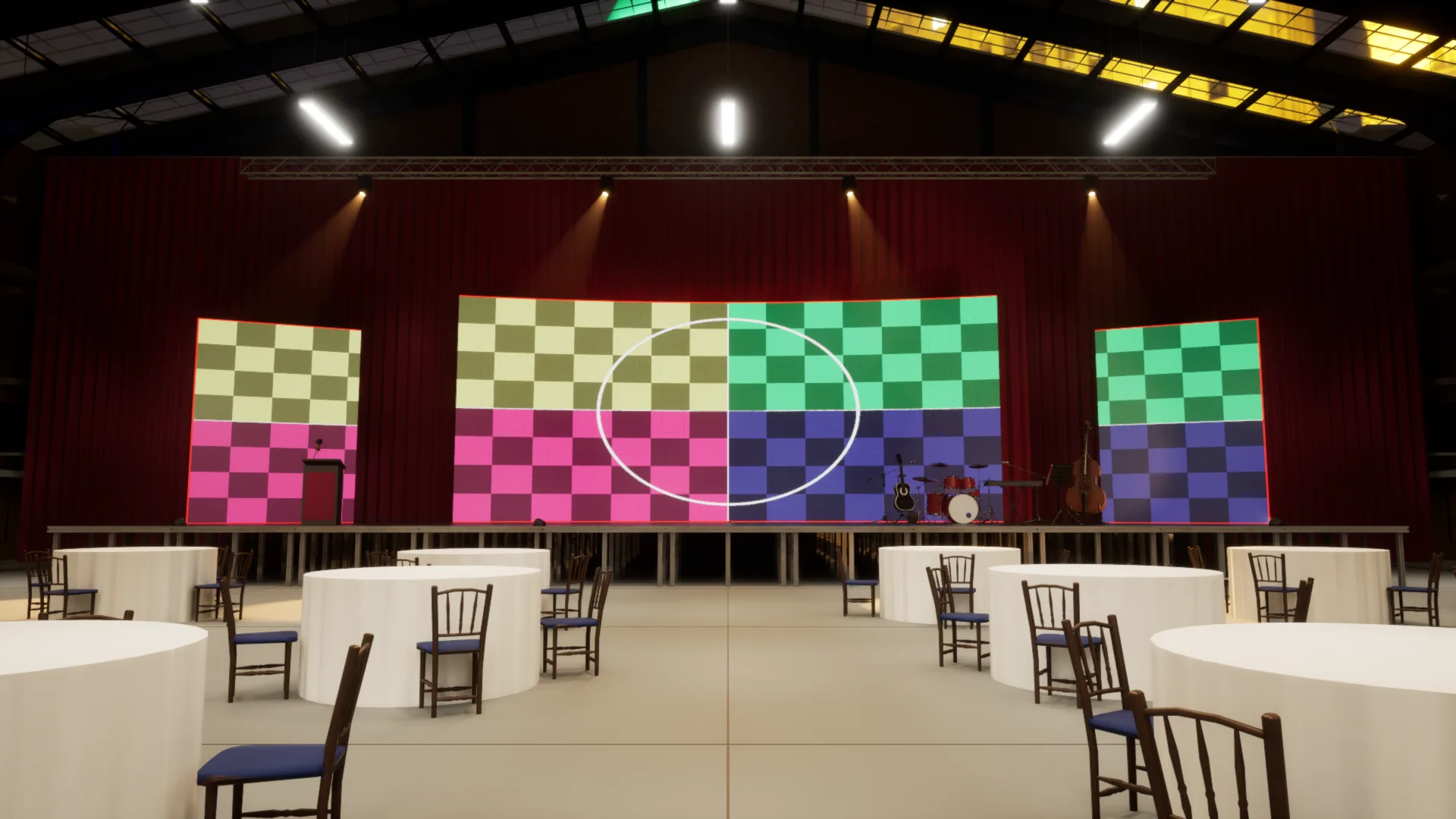
The LED walls were assembled from what is usually quoted in by rental companies, amount of panels, pixel pitch, columns and rows, brightness. Then it assembles the mesh. I also made the UVs in pixel space across the whole wall content still maps correctly. I also had to implement a fix to do the same thing an LED processor does in order to fit, fill or stretch the image, because the image was being mirrored on the wings.
2 — Cameras and light
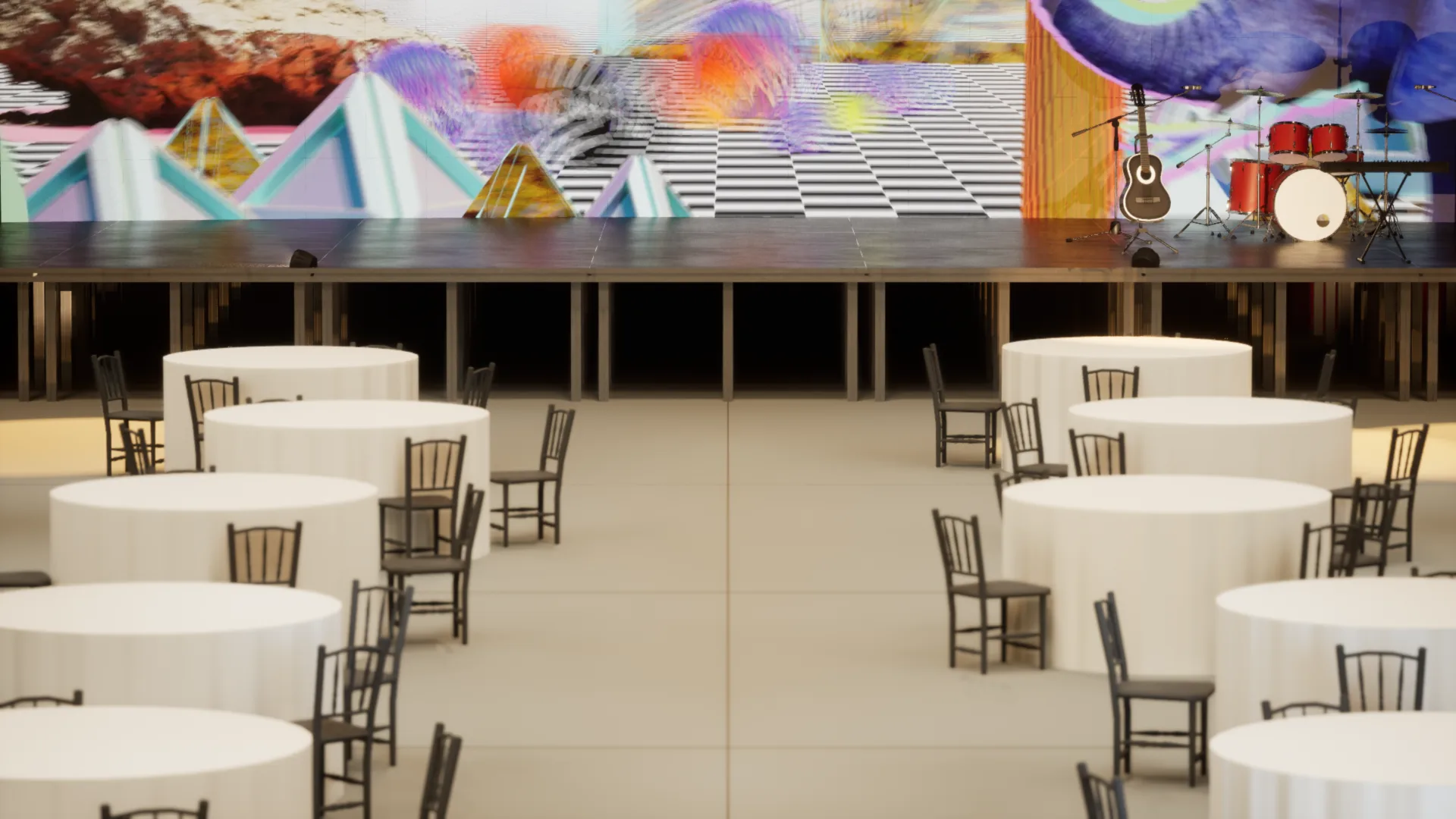
The camera rigs and screen settings were created to mimic real world usage. Exposure in the cameras comes from ISO, shutter and aperture. The screens emit in nits, the sun is in lux, and the 45 ceiling fixtures are rated in lumens. I then adjusted cameras and then adjusted focal length and aperture to get the various included here. The control and capture plugin places the sun where it actually is over Amsterdam at the different times of the day.
3 — Sunlight washout
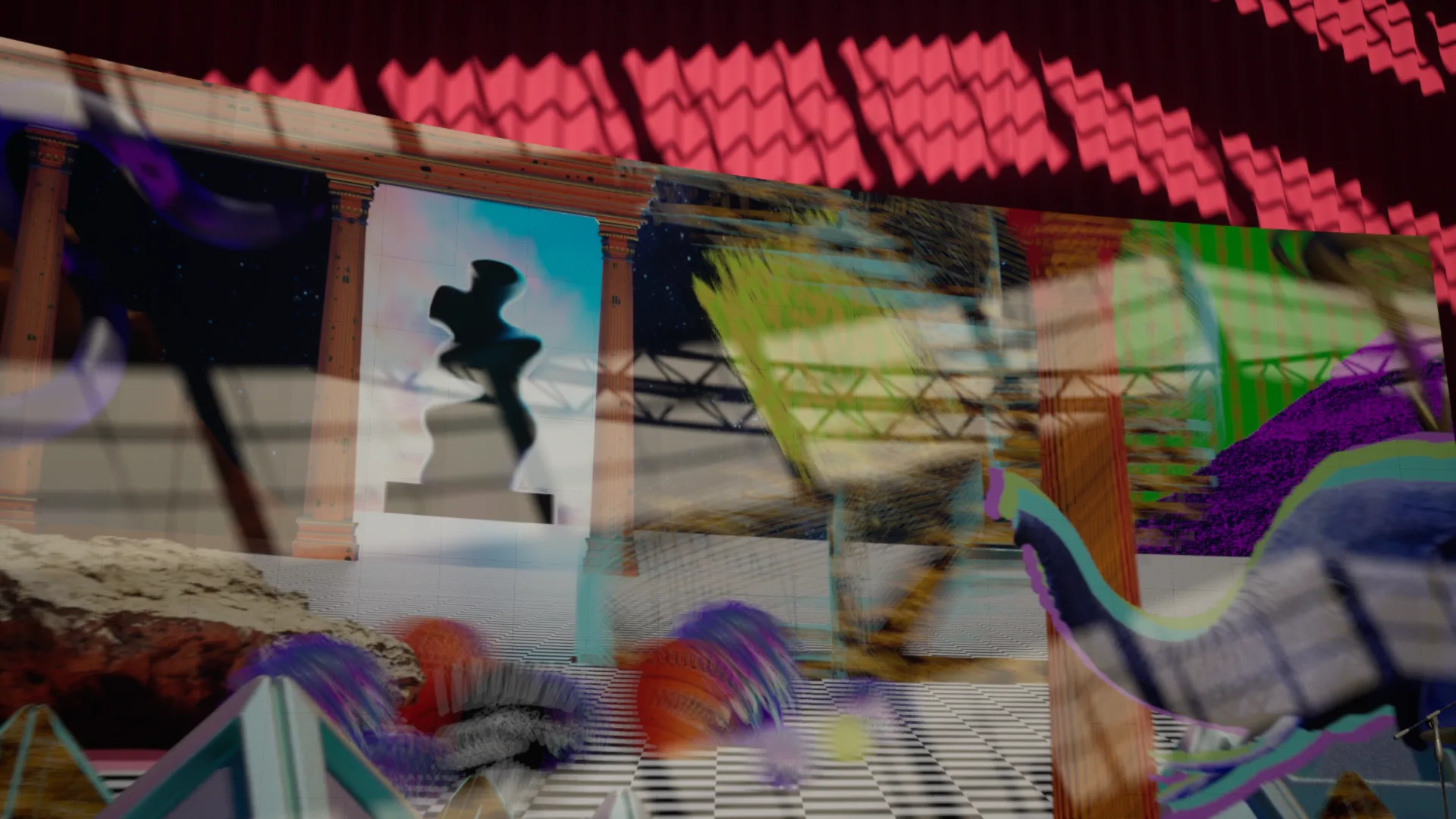
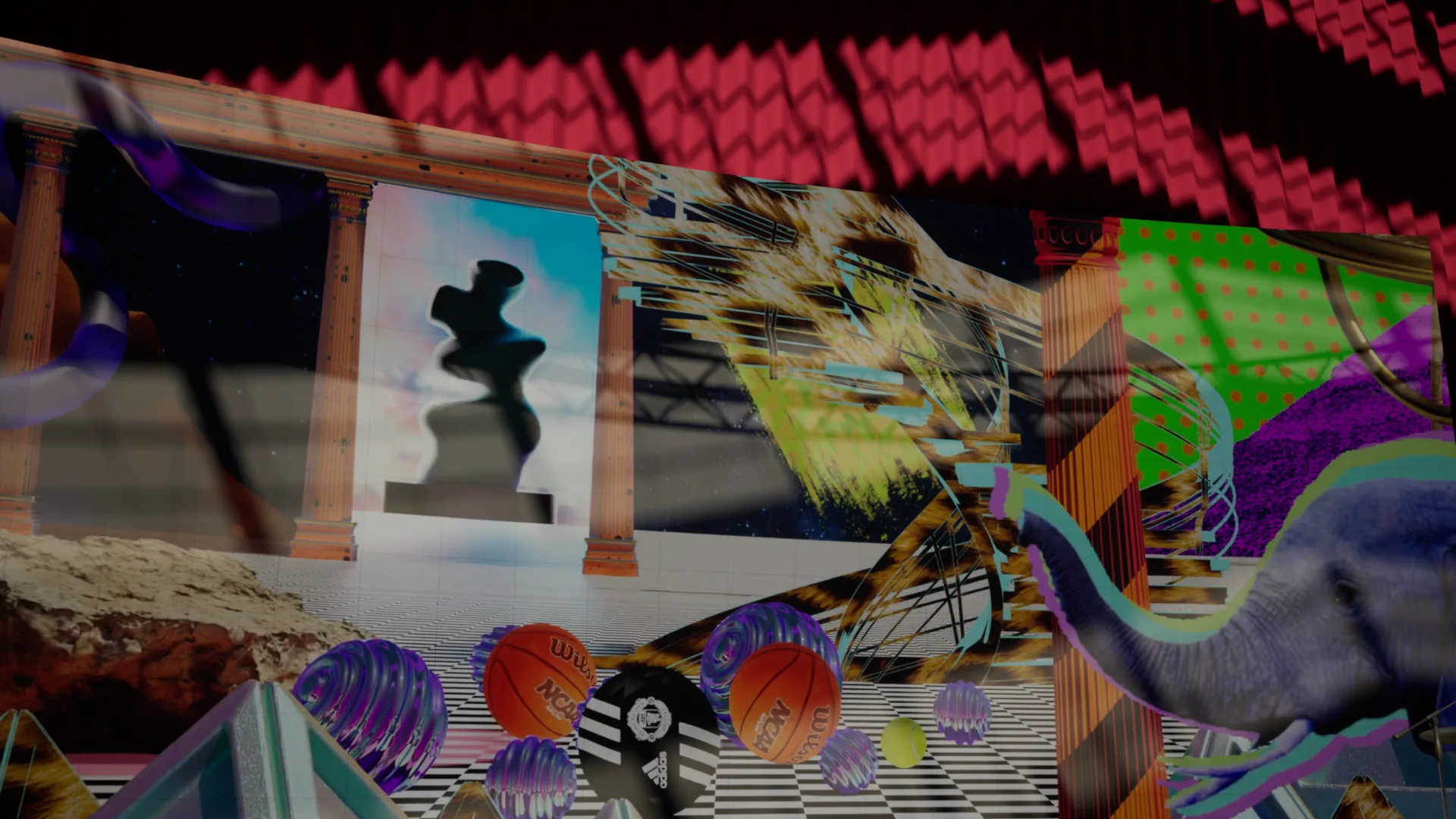
In the layout I created, the screens face south and gets plenty of direct sunlight. I did some research into the math of how an LED screen would handle that, and it turns out those would have to be outdoors rated, which would likely increase the cost significantly. Though this is really not my specialty, I feel like such LEDs would be extremely bright in a closed environment and would need proper dimming capabilities, and could easily become fatiguing.
4 — Set dressing and colours
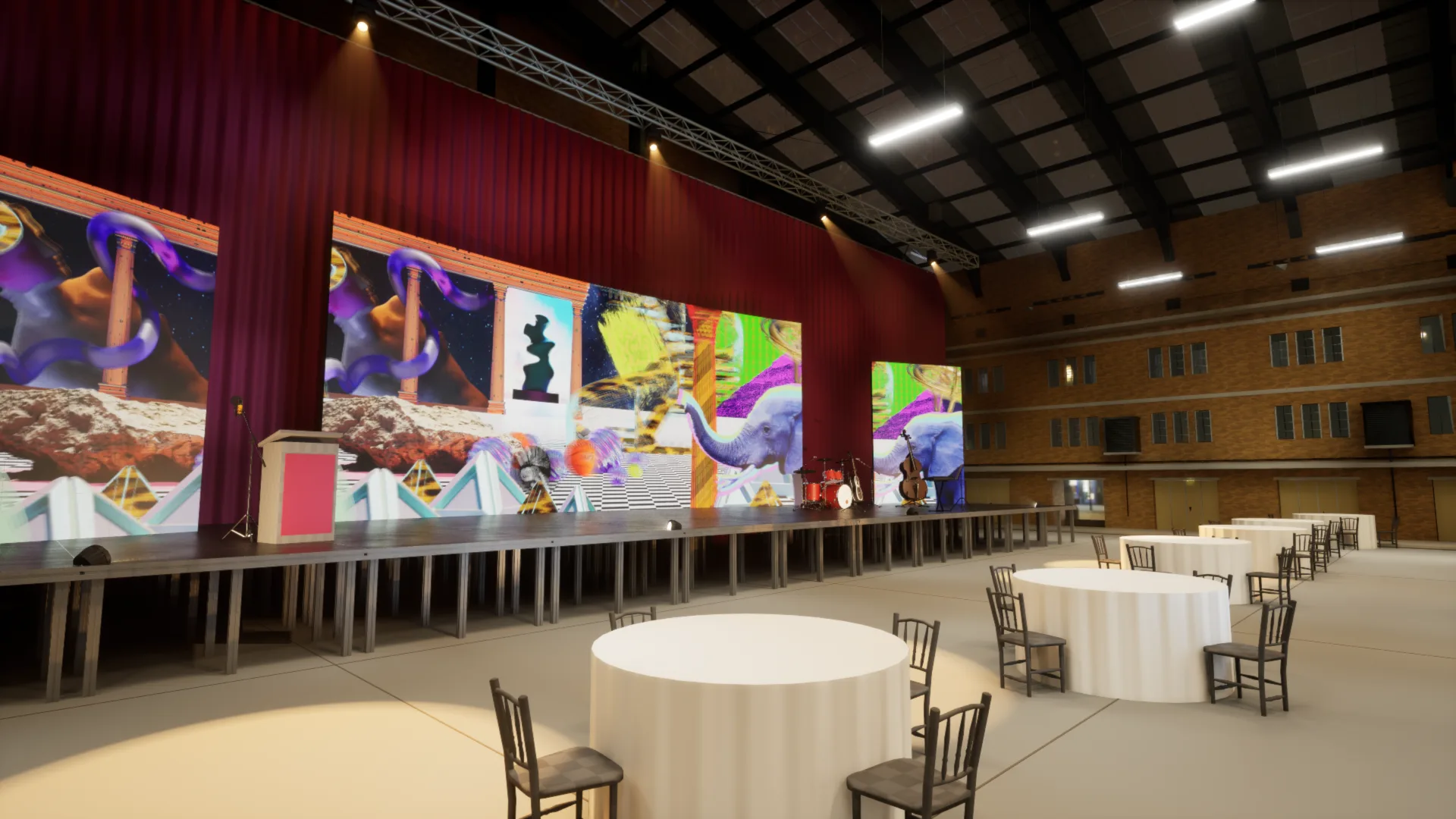
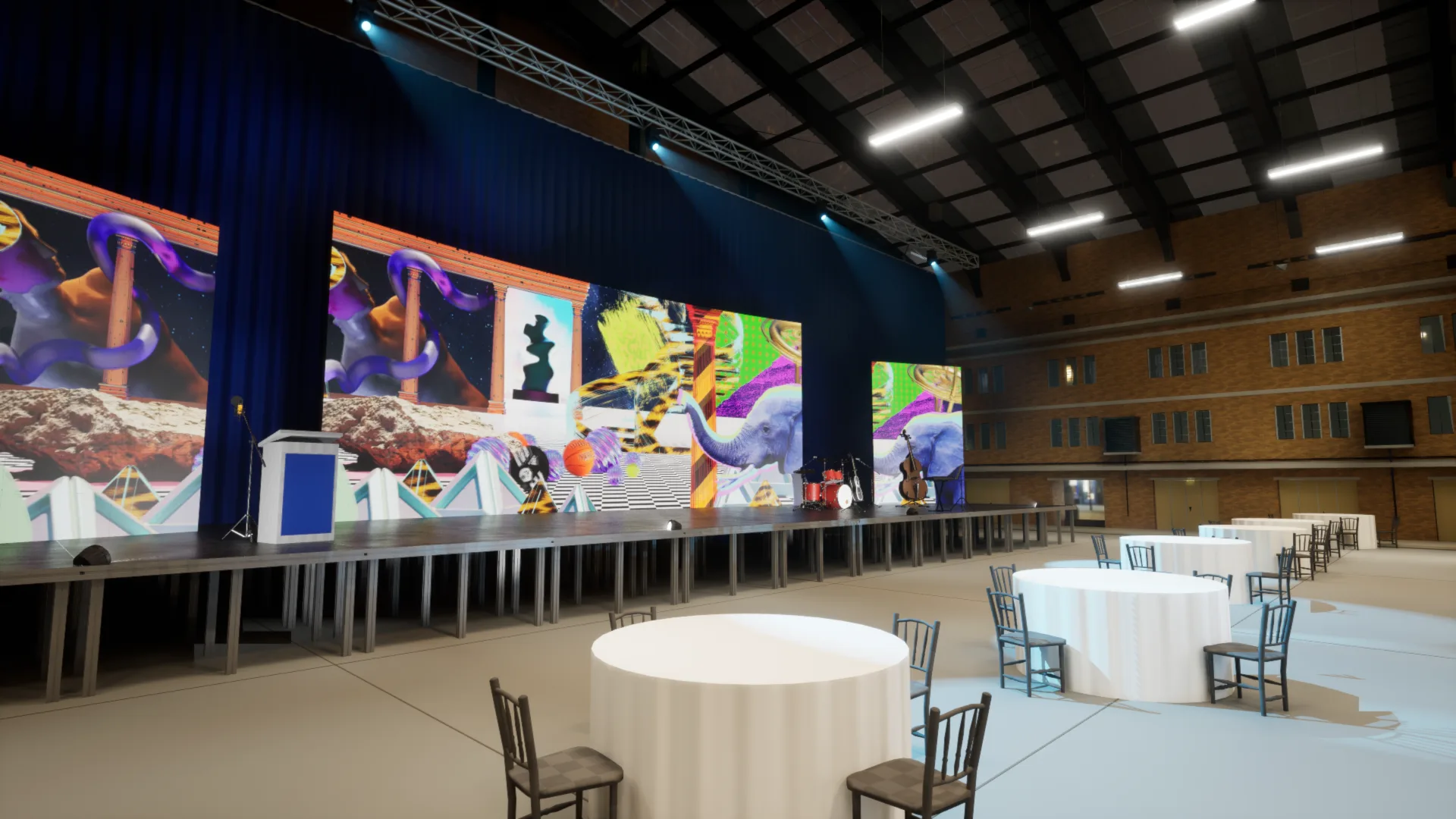
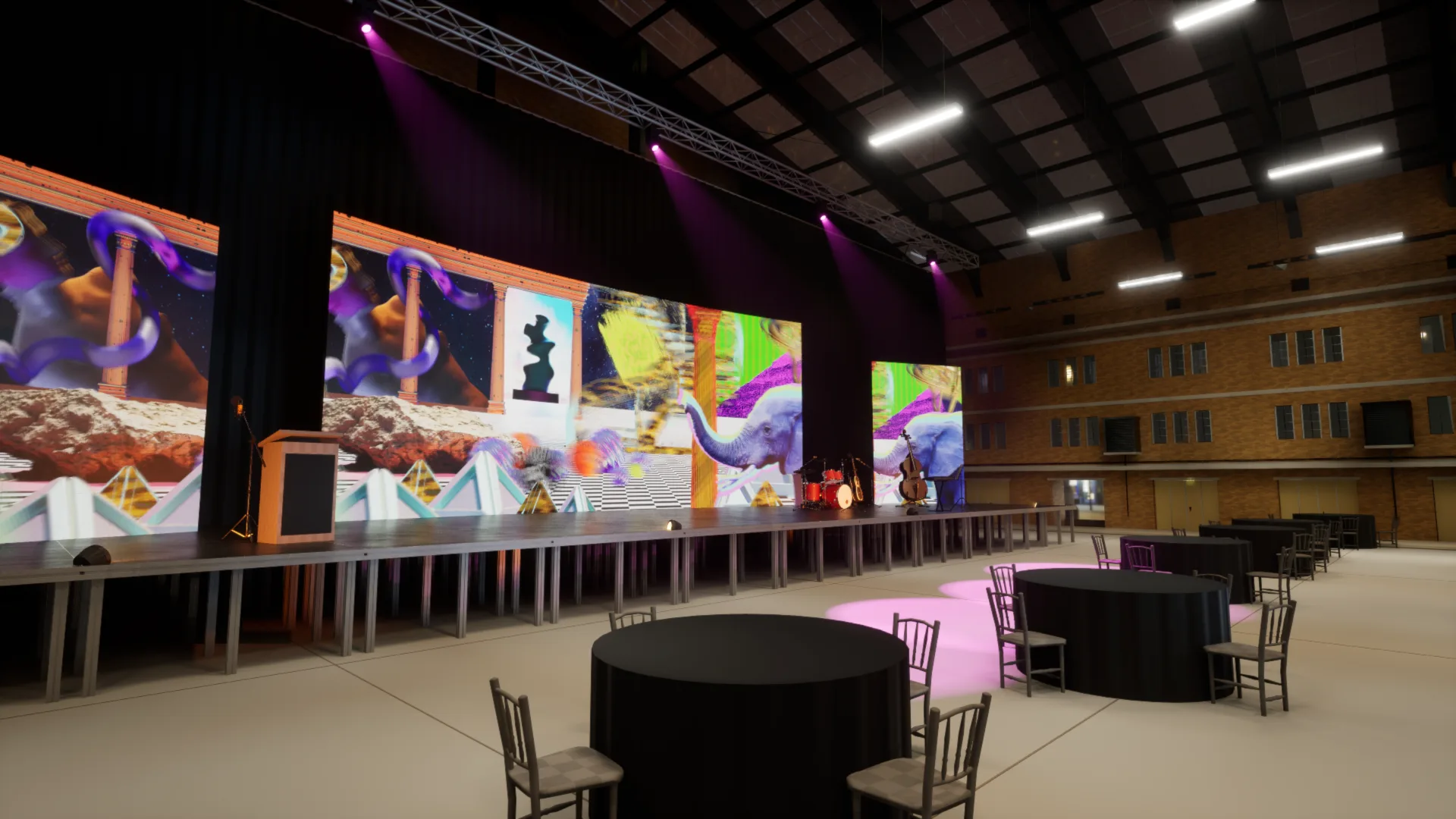
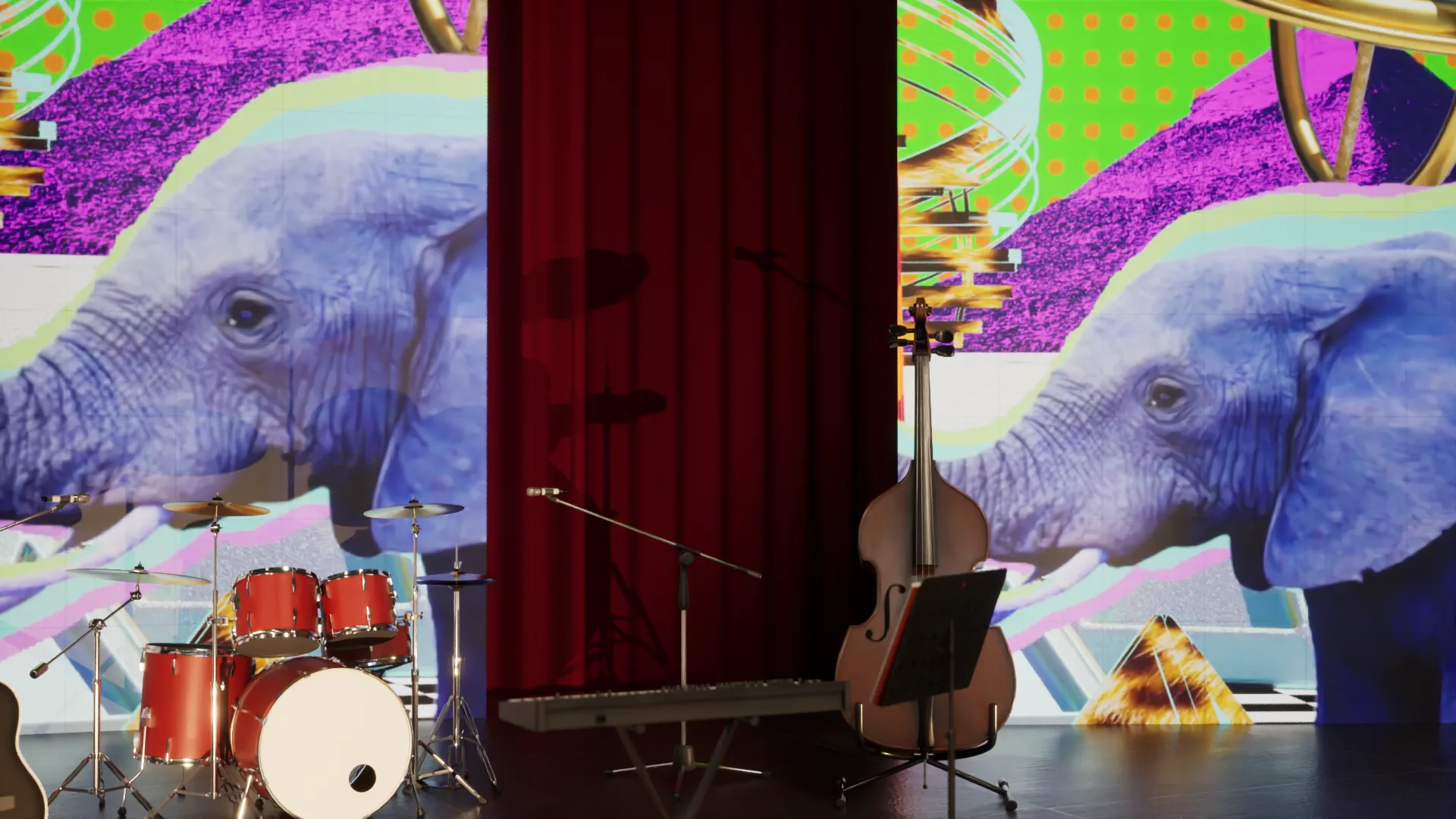
Stage was quickly dressed with drapes, band, lectern and some spots. I also added a truss with 4 moving heads up top.
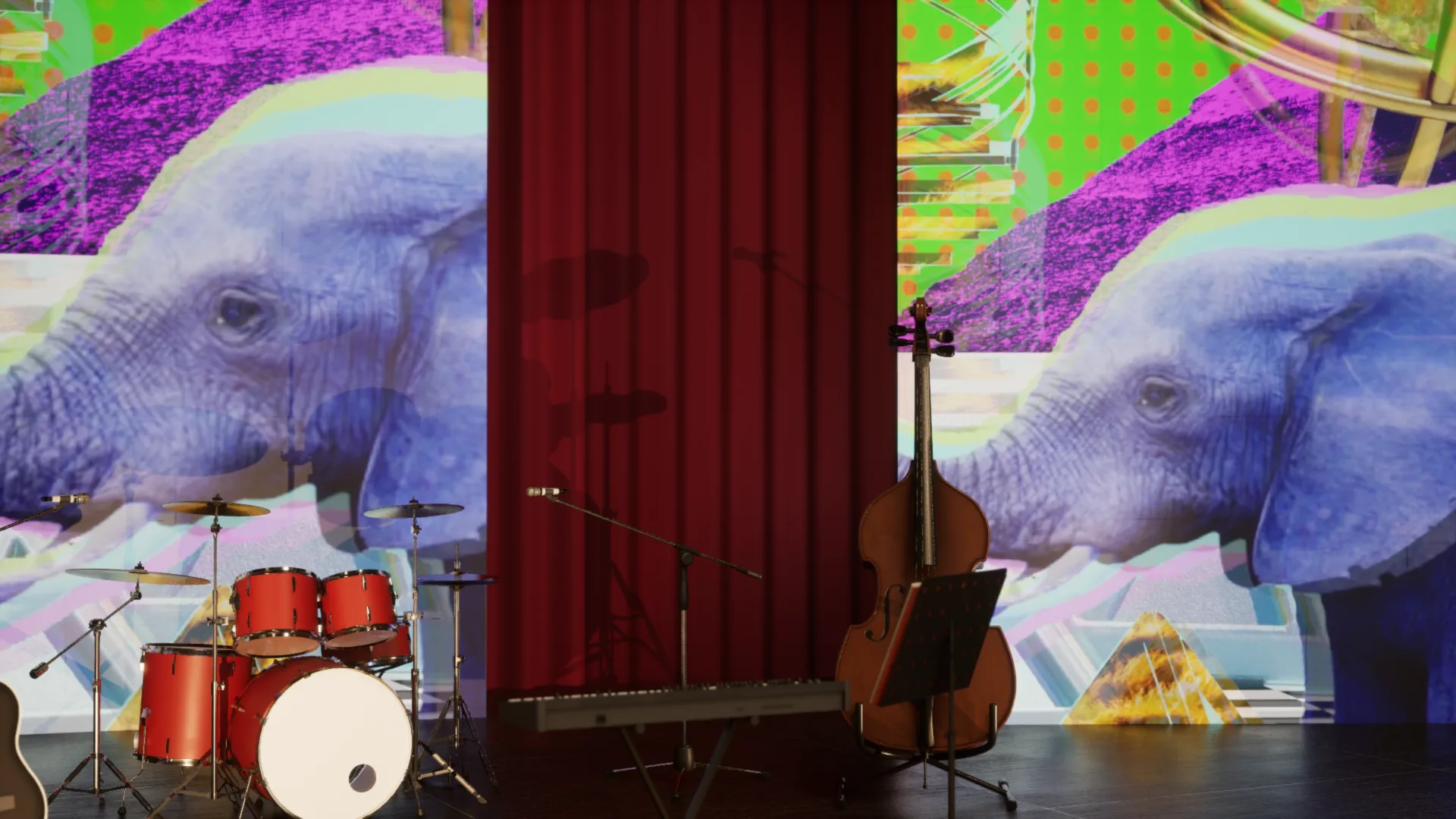
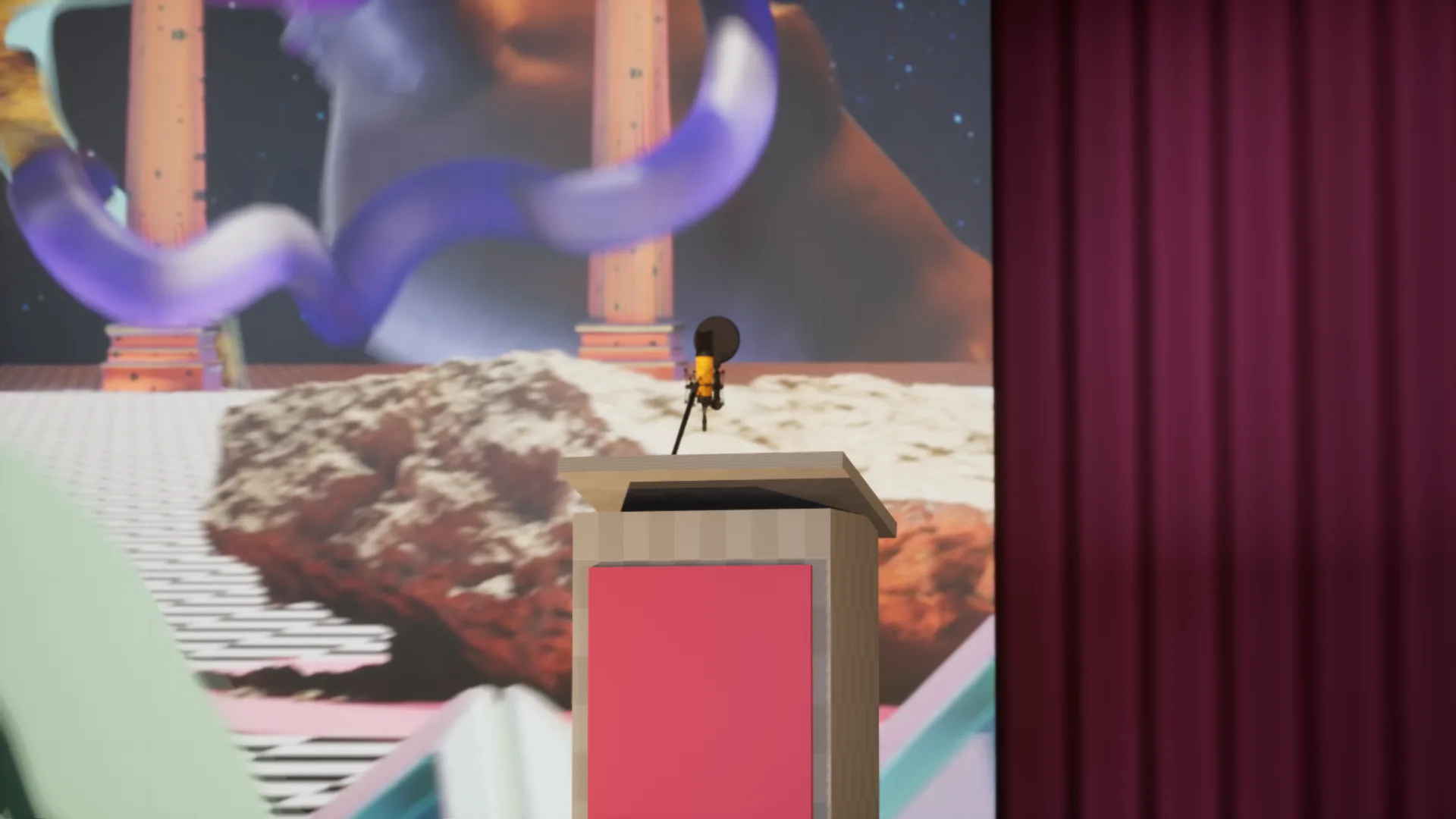
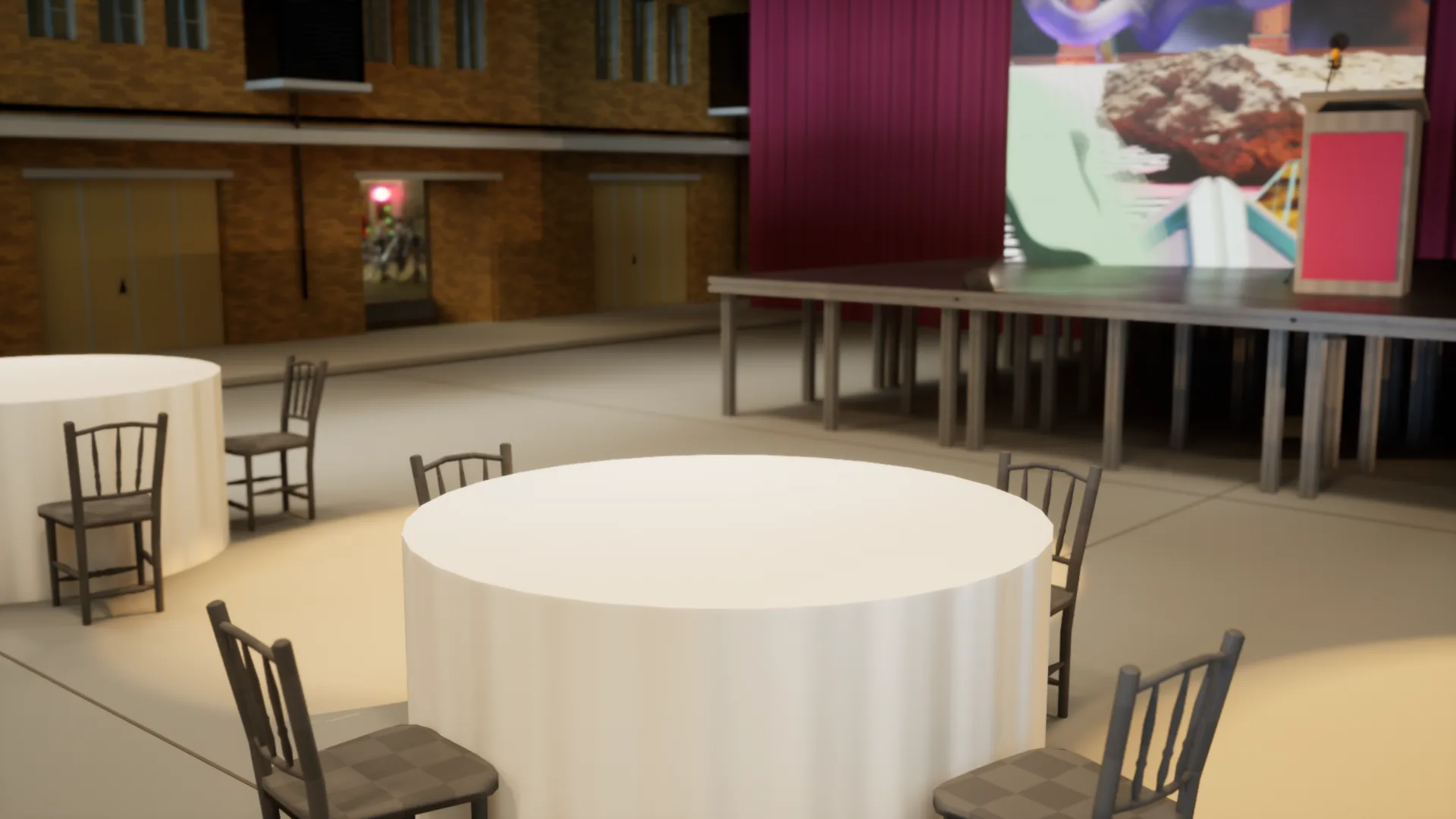
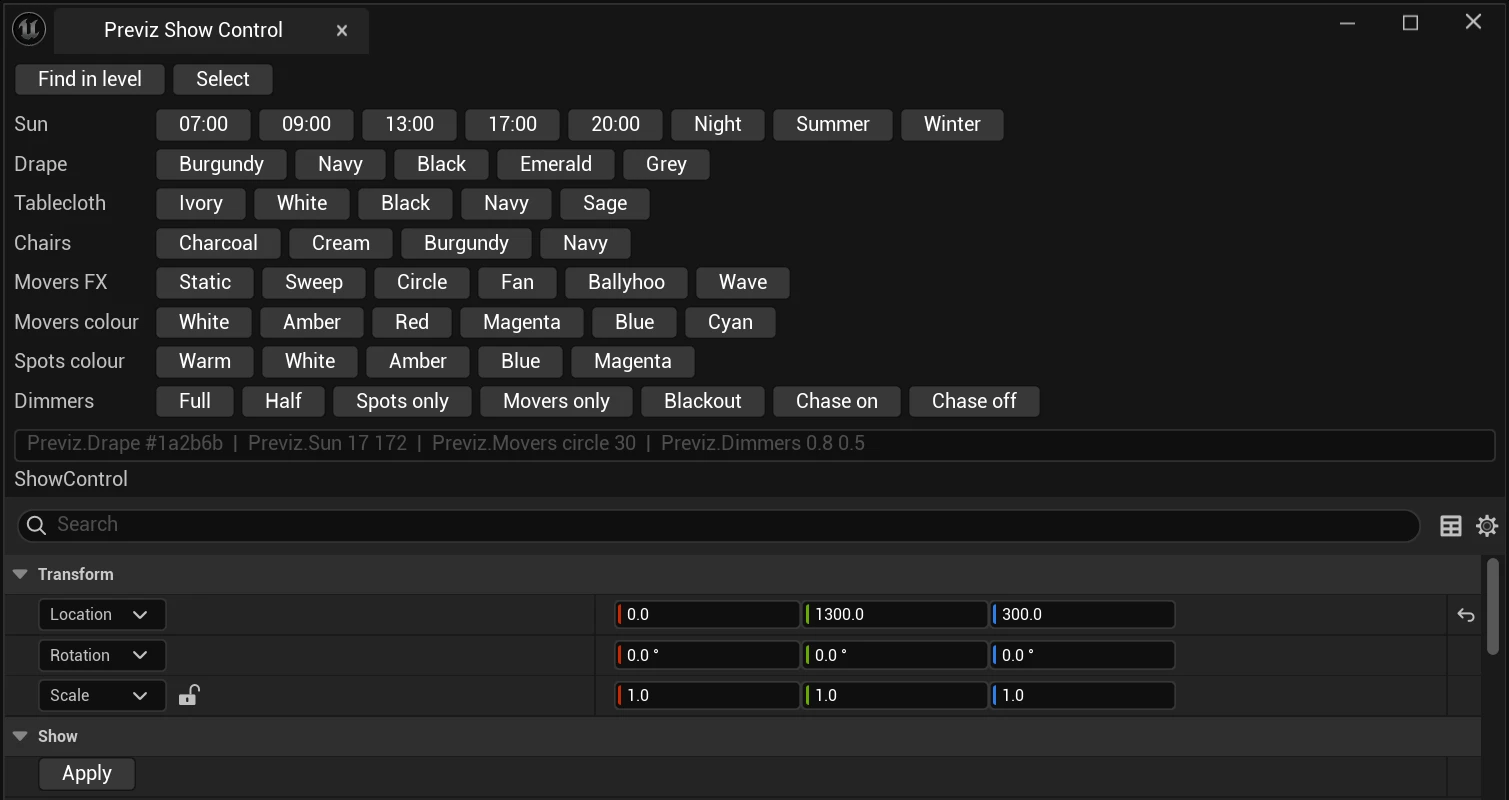
There is a plugin to control the drapes, light, cloth and fabric shades with typical colors to further assist with decision making.
5 — Lumen against the path tracer
Every still here is rendered through the Movie Render Queue with Lumen on hardware ray tracing, after enough warm-up frames for the lighting to settle. To check that Lumen wasn't inventing or losing light, I rendered the same frames with Unreal's path tracer at 512 samples per pixel. The hall model came in as one big mesh, which Lumen couldn't cover, and the bounce light was close to black; splitting it into 48 chunks fixed that, and the two renderers now agree on where the light goes. The path tracer is softer in the shadows and around the screens, and takes about forty seconds a frame against a few for Lumen.
Credits
Centrale Markthal model by Jungle Jim on Sketchfab (CC BY 4.0). Stage Decks Builder by SalvoNostrato and Round Table And Chairs by Vilson Pistori, both on Fab. Instruments from Twinmotion's Musical Pack 1 by Epic Games. Moving heads and spots from Unreal's DMX Fixtures plugin.